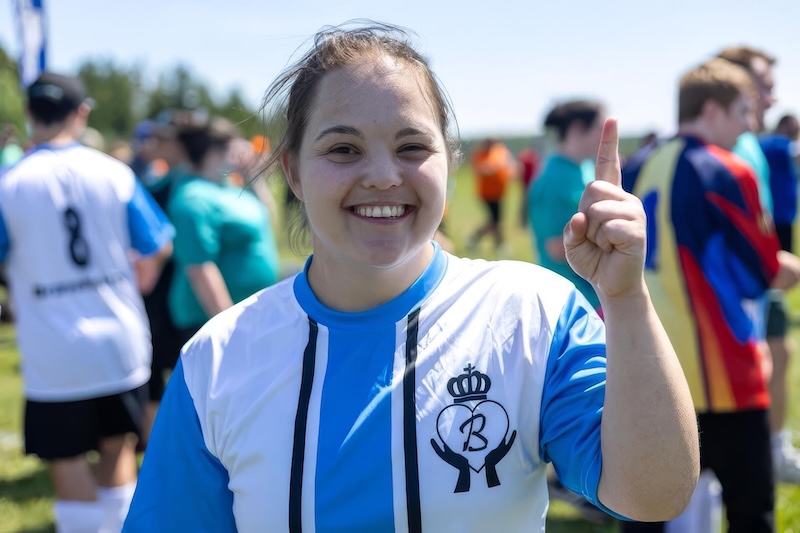

In light of new research from Health in Special Olympics Published in The JAMA Network is open, Rene Desa longtime member of the Special Olympics movement, sat down with Special Olympics Wisconsin Athlete and Health MessengerHeather Holland, to talk about mental health, stigma, and the power of community. Check out their conversation below.
This month, I spoke with Heather Holland about her mental health journey and why mental health is important to her. Heather has been an athlete since 2009 and enjoys participating in basketball, soccer, and weightlifting.
Over time, Heather’s confidence and leadership skills grew through her involvement in leading Special Olympics athletes and her presence in Sports Leadership CouncilShe was encouraged to take classes to become a Health Messenger for Special Olympics. Health Messengers are athletes trained to be health and wellness leaders, educators, advocates, and role models in their Special Olympics communities.
Heather has been a health messenger since 2021 and a mental health advocate for 15 years. Her motivation to become a health messenger was to promote mental health through Special Olympics. Through this she learned more about herself. When asked what mental health means to her, Heather said: “Mental health is important to me; I deal with it every day. Sometimes it’s hard to know what I need to get back on track, but I find that getting extra sleep and taking breaks helps.”
Heather lives with bipolar disorder and PTSD, and has spoken openly about the challenges she has faced in healthcare settings, including misunderstandings.
One of the most powerful parts of our conversation was when Heather talked about the role Special Olympics plays in her life. “Being at Special Olympics helps with my mental health: I have a great support group, fellow athletes, coaches, case managers, Special Olympics Wisconsin staff and volunteers, and since my mother died, everyone has been there for me. I really appreciate the Special Olympics family.”

In our conversation, I explained how many people underestimate individuals with intellectual and developmental disabilities (IDD) and how important it is for providers to listen to people with IDD.
The needs of people with IDD are often overlooked, leaving many of them unable to live their healthiest lives. New research from The JAMA Network is open Highlights significant mental health disparities and barriers faced by adults with IDD in the United States.
Compared to adults without functional limitations, adults with direct contact disorder are:
- more than Nine times more likely To report a diagnosis of anxiety and/or depression.
- 18 times more likely To report daily symptoms of depression.
- Seven times more likely To take medication for anxiety.
- almost Nine times more likely Taking medications to treat depression. and
- more than Five times more likely To report the inability to access necessary treatment due to cost.
The study findings reveal critical gaps in care and an urgent need for improved access to mental health support. Special Olympics works to fill these gaps Special Olympics Strong Minds.
Heather is an advocate and leader for her fellow athletes and encourages them to go to Strong Minds. Strong Minds, the mental health system for healthy athletes in Special Olympics®, He provides An interactive learning activity that focuses on developing adaptive coping skills For Special Olympics athletes and people with intellectual disabilities. When Heather feels stressed, she practices deep breathing, shares daily affirmations, and listens to music.
“Communicate, you don’t have to give advice, just be there. Just be that positive person, smile, and open the door. Help someone when they fall down on the sports field. It makes you feel good and sharing with others can be the biggest part of life. Don’t label yourself by your diagnosis, I live with it, and it doesn’t define who I am!”
Heather Holland, Special Olympics Wisconsin athlete and health messenger
Visit The JAMA Network is open To learn more about the study and its results.
Subscribe to Special Olympics Health Bulletin To stay up to date on the latest health news and catch Renee’s monthly conversations on timely health topics with Special Olympics athletes, fitness leaders, and health reporters from around the world.
Rene Des
Rene Dees joined the Special Olympics movement nearly 50 years ago. She retired in 2024, but her work currently focuses on sports leadership and spreading the health stories of Special Olympics athletes around the world. Rene earned an Associate of Arts degree in Liberal Studies. She is fond of creative writing, poetry and attending theatre.