-

Myron Medcalf
Multiple authors
The 2025-26 men’s college basketball season was defined by the stars who turned it into one of the most exciting seasons for the sport in recent memory. The freshman class has an abundance of talent, and there are transfers who have transformed programs, with many from either class emerging as household names.
Who else should be on your radar?
We’ve identified 25 rising stars to know about — players who have recovered from injuries, returnees who have made big strides with the same program, and prospects who weren’t expected to have the immediate impacts they did in their first seasons of Division I basketball.


Last season, Howe was a key backup for a Florida team that cut down the net in San Antonio. This season, he is a bona fide All-America candidate and will likely lead the Gators to their second straight national title in program history. His scoring average rose from 9.8 to 16.9 points while maintaining a similar impact on the glass with 6.0 rebounds per game.

Last season, Anderson was a star in the Sweet 16. This season, he has taken advantage of a greater workload — jumping from 30.5 to 38.7 minutes per game — to emerge as an All-America candidate with 19.6 PPG, 7.7 APG and a 43.9% 3-point shooting rate. With teammate JT Toupin out for the season, Anderson will have to play Batman and Robin for the Red Raiders come March.

Nate Oats coached Alabama to a top-five finish in offensive efficiency with former All-America guard Mark Sears running the show the previous two seasons. Now Philon is the catalyst that helps the Crimson Tide maintain that production. He averaged 21.3 points as a sophomore, effectively doubling his 10.6 PPG mark as a freshman.

Although MaxPreps selected Wagler as the 2024-25 Kansas High School Player of the Year, the 6-foot-6 guard did not receive many scholarship offers — Illinois was just one of two high-profile programs to give him one shot. But the Fighting Illini have found a new, unknown player who can lead them to their first Final Four since 2005, win Big Ten Player of the Year honors, and secure a spot in the NBA lottery.

After not starting a single game as a freshman, Tanner is in contention for SEC Player of the Year, averaging 18.5 points while leading Vanderbilt to what will be only its second NCAA Tournament appearance since 2017. Which is why Mark Byington is a candidate for National Coach of the Year.

Momcilovich was a contributor (11.5 PPG) on the 2024-25 Iowa State team that earned a No. 3 seed before losing in the second round of the NCAA Tournament. He now averages 17.4 points and is one of the greatest three-point shooters (50.7%, No. 1 in the nation) in modern college basketball history. The 6-foot-8 forward is the catalyst for a top-20 offense.

Amid the ups and downs of Darren Peterson’s availability, Kansas has relied on Bidonga’s consistency. The Jayhawks are 28.7 points per 100 possessions better when he’s on the court, according to advanced analytics site EvanMiya, and they’ve benefited from his defensive presence (9.2 RPG).

The 6-foot-10 big man is arguably UConn’s most important player. After Reid started just once last season, he started every game he was healthy for the season (24). The Huskies are at their best when he’s playing — they’re 11.5 points better per 100 possessions with him on the court, according to Evanmia.

The defending national champion Gators have lost just two games since Dec. 9, and feature the No. 3 defense in America over that stretch. Chinillo’s contribution to this rise? Opposing players hit only 37% of their shots around the rim against him.

Mark Few said Huff could return from a left knee injury in time for the NCAA Tournament, making the 6-foot-10 star eligible for this roster. Since he last played on Jan. 8, Gonzaga’s offense has dropped to 62nd in adjusted efficiency — a sign of the impact he and his 17.8 PPG have made in an injury-impacted breakout season.

Mast missed the 2023-24 season with a knee injury before returning this season to lead Nebraska to a historic 20-0 start. The 6-foot-10 center has proven that few big men in America can match his all-around game: He ranks third in points (13.8), rebounds (6.1) and assists (3.1) for the Cornhuskers.

Cameron Boozer is the leader of a solid Duke team — that much is clear — but Evans is the crucial catalyst for the Blue Devils. He’s hit 44.4% of his 3-point attempts during his five-game winning streak, a sign of a major turnaround for a player who went from 6.8 points to 14.7 season after season.

As a backup to All-America point guard Mark Sears last season, Holloway looked the part of the future leader of an Alabama team that reached the Elite Eight a year ago. He’s become much more than that, as evidenced by the 16.4 points and 4.9 assists he’s averaged during the Tide’s current seven-game winning streak.

A lower leg injury cost Krevas the bulk of last season. He played in only eight matches. He has since returned as one of the announcers for the Arizona team that won its first 23 games. Averaging 10.6 points, 8.5 rebounds and 1.9 blocks, Krevas was ranked as an excellent offensive and defensive player by Synergy Sports in his comeback season.
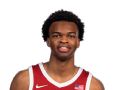
In high school, the 6-foot-2 guard wasn’t ranked as a top-three prospect in the state of New Hampshire. Now, Okorie ranks fifth in the country in scoring (22.8) in one of the most surprising spikes of the season for a freshman who wasn’t even on the national radar before this season. He scored 30 or more points five times in 2025-26.
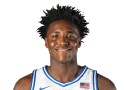
Ngongba has become one of Duke’s best contributors, and seems to be betting better with each passing game. The 6-foot-11 center helped the Blue Devils overcome one of the most dominant frontcourts in America when they overcame then-No. 1 Michigan on Saturday. He made 60.2% of his shots while holding opponents to 52% around the rim.

Chandler has been a consistent starter for Kentucky after averaging 10.4 minutes. The 6-foot-5 guard made one of the country’s most impressive jumps as a shooter over the past year, jumping from a 34.7% clip from 3-point range last season to 43.1% this season (including 46.1% in SEC play).
The jump Miller made over the past year — from 13.2 PPG and 34.1% from 3 to 18.6 and 41.9% — is the reason why SMU was able to earn an overall NCAA Tournament bid for the first time in nearly a decade. In his team’s biggest wins of the season, against North Carolina and Louisville, the 6-foot guard scored 50 total points.

When first-year coach Ryan Odom announced the signing of the 6-foot-9 Belgian forward, he said the rookie “will make an immediate impact in our frontcourt.” Ridder has lived up to that expectation with his production (15.9 PPG, 6.4 RPG). With its first year on the court, Virginia scored 121.3 points per 100 possessions.

It’s not easy to showcase the impact a young European can have in college, but New Mexico could win a Mountain West title in Eric Olin’s first season at the helm as a result of his hiring of Bolgan. The Croatian standout is averaging nearly a double-double (11.9 points, 9.8 rebounds).

Hill averaged just 6.2 minutes a season ago and is now the leading scorer — 14.3 on 36.5% shooting from 3 — for a VCU team that is chasing St. Louis for an Atlantic 10 title and its third NCAA Tournament appearance in four years.

The 5-foot-11 Johnson is one of the best players in America. He’s also one of the most improved players, going from 6.6 PPG last season to 17.4 this season — and that’s on top of 3.5 APG and 2.6 SPG while shooting 40.9% from beyond the arc.

The Spartans’ elite team has made huge strides in scoring (12.3 points per minute), on the glass (9.3 points per minute), and at the free throw line (86%). But the 6-foot-9 forward’s transformation into a deep-ball threat (40% on 4.1 3-point attempts per game) has given Tom Izzo’s team a big boost in its quest for another deep tournament run.

The 6-foot-6 sophomore, who hit 59% of his shots inside the arc, is a two-way threat for Josh Schertz’s squad. McCoughtry was listed as a “very good” defensive player for the Pelicans who played in the top 25 defense this season. Robbie Avila is the face of the program, but McCoughtry is key to this team’s success in 2025-26.

The 6-foot-2 freshman wasn’t bombarded with scholarship offers after winning Penn’s Most Valuable Player award. Averaging 18.3 points for a Merrimack school seeking the first NCAA Division I tournament appearance in school history, the five-time MAAC Rookie of the Week made a lot of schools that passed him look foolish.