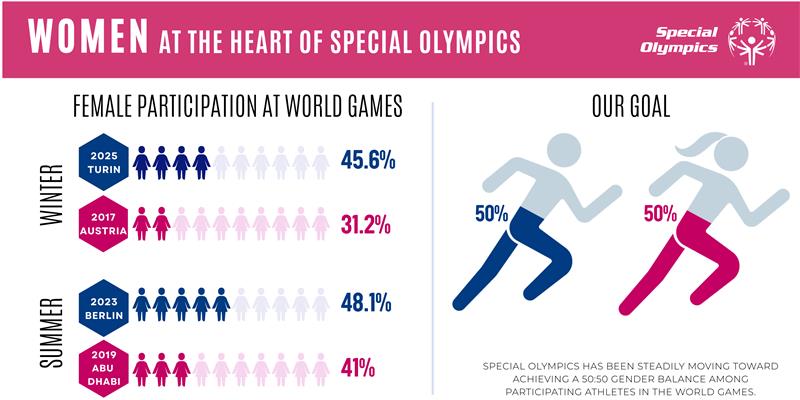

Women Play, Women Lead is a global initiative designed to address a clear and persistent gap: in every Special Olympics region, there are fewer women sports leaders than male leaders, and fewer female athletes overall. Data from the 2024 Census confirmed what many programs were already seeing: that women and girls with intellectual disabilities are underrepresented in leadership roles, limiting visibility, voice and opportunity.
With support from Bank of America, each participating program launched a Women Play, Women Lead program to intentionally increase female leadership. Through the project, 571 women and girls worldwide were trained in leadership skills, and 364 of them have already advanced to meaningful leadership roles.
The initiative focused on leadership training, access to meaningful roles, and measurable results, ensuring that women not only participate but lead as well. At all sites, the programs set target participation numbers, trained each participant in leadership skills, and tracked the number of female athletes who moved into meaningful leadership roles.
While methods vary depending on culture and context, the goal is shared: to empower women and girls Intellectual disabilities To build confidence, develop skills, and claim their place as leaders. Here are some highlights from participating sites, illustrating how women are playing, and women leading, in making an impact on the ground.
China

Women play, women lead China It brought together female athletes from multiple districts to build leadership skills, confidence, and regional connections. The program focused on self-awareness, communication, network building, practical leadership, and supporting athletes to understand their rights, share their voices, and take on advocacy roles within their schools and communities.
“Through this event, I learned about healthy relationships, self-protection and effective communication. These lessons have given me more confidence in my daily life and in competitions and encouraged me to express myself more openly. I have learned to respect myself and say proudly: ‘I am a girl’. And to ask others with disabilities to believe in their dreams. Just like the meaning of my name, I want to be a little sun, spreading warmth, light and joy wherever I go.”
Lu Yuming, athlete, Kunming, Yunnan Province
Female athletes were meaningfully engaged throughout the programme, actively participating in workshops, leading discussions, and sharing personal stories related to sport, gender, and disability. The athletes also developed and presented their own community project ideas, translating leadership training into real action. Through an athlete-centered approach, participants boosted confidence, built peer networks, and stepped into leadership as speakers, role models, and advocates for inclusion.
Guatemala

Guatemala Women’s Play, Women’s Leadership was launched through a national Women’s Play, Women’s Leadership forum, bringing together more than 40 women, including sports leaders, family members and community participants from multiple regions. The forum included successful Guatemalan women from diverse fields and emphasized peer learning, motivation, and shared leadership.
“It has changed everything for me. The way I see life now is completely different from how I lived it before, because I spent years confined to the house. Now, discovering the inclusion movement, leadership, sports and education is incredible, because everything comes together to become a good leader and emerge from the unknown.”
Lucia Romero, Special Olympics Guatemala tennis player
The program also partnered with Dale Carnegie to offer the Women’s Leadership Diploma, which combines virtual coursework with an in-person capstone event. A dedicated WhatsApp group helped maintain engagement by sharing educational materials, motivation and upcoming opportunities.
Existing sports leaders played a crucial role in recruiting, mentoring and supporting new participants. Athlete leaders Kelly Maldonado and Lorena Morales co-led the planning efforts and served as forum moderators, modeling leadership and collaboration throughout the project.
Maryland (USA)

Photography by Marilyn van den Neste
Special Olympics Maryland The “Women Play, Women Lead” program was implemented through a women’s summit, planned and led by a committee of seven sports leaders along with staff. Sports leaders were involved from the early planning stages, shaping the agenda, speakers, activities and logistics.
The summit brought together 58 female participants, including athlete leaders, non-leader athletes, chaperones, and community partners. Educational sessions focused on sports leadership, advocacy and decision-making, with athletes leading presentations and sharing life experiences.
“The Women’s Summit means I get to celebrate and recognize all the other Special Olympics Maryland athletes.”
Briazia Moore, Special Olympics athlete from Maryland
Interactive activities, performances and community partnerships created an inclusive and lively environment. As a direct result, many participants took their first steps towards becoming sports leaders, demonstrating the direct impact of the Summit on leadership paths.
Morocco

in MoroccoWomen Play, Women Lead has been launched in Marrakesh, Casablanca and Tetouan, with workshops adapted to the local culture and athletes’ needs. Each area is stressed differently
Leadership themes, including self-expression, motivation, communication, and lived leadership experiences shared by athletes and community leaders.
“I am so proud to have participated in the Women Play, Women Lead workshop. It has boosted my self-confidence and opened my eyes to the power of seeing women like me rise up, lead and succeed. Knowing that others who share my challenges have achieved their goals has inspired me to believe, more than ever, that my dreams are within reach.”
Hala El Marghini, Moroccan Special Olympics athlete
The sessions combined storytelling, group activities and athlete-led discussions, creating interactive and inclusive learning environments. Accessibility, including the use of interpreters for deaf participants, was prioritized and ensuring full participation.
Athletes were active contributors, sharing experiences, practicing leadership skills, and committed to bringing lessons back to their communities. A concluding “Mirror Activity,” in which athletes loudly asserted their strengths and boosted their self-esteem and confidence, left a lasting impression in all areas.
Senegal
in SenegalThe Women Play, Women Lead program was implemented in Dakar and Ziguinchor through a series of comprehensive, skills-based workshops designed to enhance self-confidence, communication and leadership capacity. The training sessions focused on communication and advocacy, public speaking, protection, nutrition, fitness leadership, health awareness, personal hygiene and menstrual hygiene. The sessions were organized in partnership with Social Change Factory and were tailored to the life experiences of athletes.
Athletes were meaningfully involved throughout the process, including helping to set schedules, shaping activities, and leading discussions, especially during menstrual hygiene sessions. Participation and participation were consistently strong, with athletes showing an increase in confidence, commitment and leadership readiness.
One of the featured participants, Adama Ndau, joined the Sports Leadership Programs in 2024 and quickly emerged as a leader through her initiative, adaptability and enthusiasm. Since participating in the Women Play, Women Lead program, Adama has developed into a confident athlete leader, demonstrating how targeted investment can unleash leadership potential.
Serbia
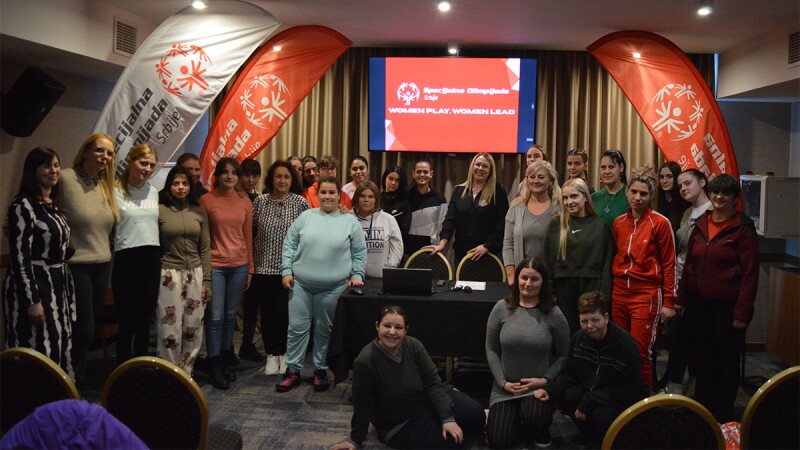
in SerbiaWomen Play and Women Lead focused on structured leadership development through regional trainings, blended learning workshops, and partnerships with female coaches and women-focused organizations. Even halfway through the project, the program has made significant progress in empowering female athletes as leaders, mentors, and advocates.
“Playing sports has helped me believe in myself. On the field, I learned that my voice matters and that I can lead by example. Being surrounded by other women and girls today has reminded me that when we support each other, we are stronger in both sports and in life.”
Naide Demir, Serbian Special Olympics athlete
The participants participated in workshops on public speaking, decision-making, teamwork, advocacy, and self-confidence, with the support of experienced female sports leaders and coaches. Female athletes have served as event speakers, mentors to new participants, and co-ordinated local programs and awareness campaigns.
By centering women’s voices and experiences, the program creates women-oriented safe spaces where athletes can explore leadership at their own pace. This approach has strengthened the confidence, vision and long-term pathways for women’s leadership across Special Olympics Serbia.
Thailand

Thailand Integrating women’s play and women’s leadership into the school’s sports leadership program, and accessing women’s mathematics in special education schools that already participate in Special Olympics sports. Teachers from these schools have been trained to be sports leadership mentors, enabling them to deliver leadership programs directly within school settings.
“I used to feel nervous when speaking or expressing my thoughts, because I am so afraid of making a mistake in public. After attending the Sports Leadership Program, I learned to trust myself more. I also saw that other students were just as nervous as me. Working and learning through our mistakes together is like playing on a sports team. When we keep practicing sports, we always get better.”
Kaywalin “Ben” Thaminium for Special Olympics Thailand
By November 2025, ten schools had implemented school-based sports leadership and successfully trained 85 female sports leaders. Leadership training included the Health Messenger Program curriculum, which requires athletes to lead real-world health promotion activities such as health education and health practices within their schools.
Women sports leaders also took on additional responsibilities, including supervising younger students and supporting teachers during school activities. Through this model, women were not only trained, but given confidence in leadership roles, enhancing confidence and visibility in everyday environments.
Common effect
Across all regions, Women Play, Women Lead has proven that when women and girls with intellectual disabilities are intentionally supported, trained and confident, they step into leadership with confidence and purpose.
More than just a program, Women Play, Women Lead is building a global pipeline of women leaders to amplify voices, expand opportunities, and ensure that women don’t just play, they lead.